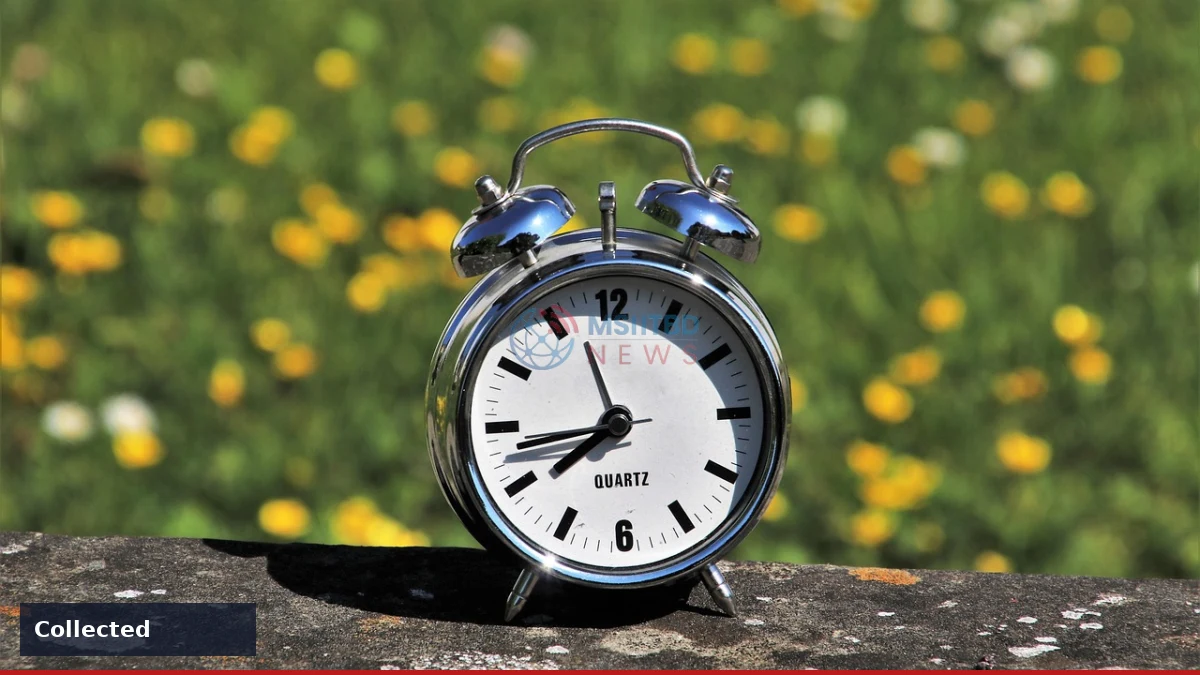
Most Americans will gain an extra hour of sleep when clocks fall back at 2 a.m. on Sunday, Nov 1, 2026.
Key points
- Daylight saving time ends on Nov 1, 2026 at 2 a.m.; clocks are set back one hour.
- The majority of U.S. states observe DST, but Hawaii, most of Arizona and several territories do not.
- Congress is considering the Sunshine Protection Act to make DST year‑round, but the bill faces a Senate deadline in early January.
- Phones and other devices that are set to update automatically will change the time without user intervention.
For 2026, daylight saving time (DST) officially ends at 2 a.m. local time on Sunday, Nov 1, when clocks are set back one hour, giving the majority of the country an additional hour of sleep.
DST runs from March to early November, shifting an hour of daylight from the morning to the evening. In Boston, for example, sunrise on the Saturday before the change is at 7:16 a.m. and sunset at 5:39 p.m.; after the shift, sunrise moves to 6:17 a.m. and sunset to 4:37 p.m.
When the clocks change
The United States first adopted DST in 1918 to conserve fuel during World War I, repealed it after the war, and later reinstated it during World II and the 1970s energy crisis. A uniform start and end date was finally set by Congress in 1966, and the current schedule—ending on the first Sunday in November—has been in place since a 2005 law moved the date from the last Sunday of October.
Earlier this year, the Sunshine Protection Act, which would make DST permanent, cleared the House and moved to the Senate. The bill, backed by former President Trump, also allows states to opt out of DST entirely. Lawmakers have until early January—when the new congressional class takes office—for the Senate to act, or the proposal will expire.
Why daylight saving time exists
Hawaii and most of Arizona do not observe DST, and the U.S. territories of American Samoa, Guam, the Northern Mariana Islands, Puerto Rico and the U.S. Virgin Islands also stay on standard time year‑round. The Navajo Nation, however, follows DST to stay aligned with neighboring states.
Smartphones and most modern devices will adjust automatically if set to update time automatically. Apple, Google and Samsung provide support pages for confirming the setting, and carriers such as Simple Mobile and Straight Talk have posted similar instructions.
Reader questions
When does daylight saving time end in 2026?
DST ends at 2 a.m. local time on Sunday, Nov 1, 2026, when clocks are set back one hour.
Which states or territories do not observe daylight saving time?
Hawaii and most of Arizona do not observe DST. U.S. territories—including American Samoa, Guam, the Northern Mariana Islands, Puerto Rico and the U.S. Virgin Islands—also stay on standard time year‑round.
Will my phone change automatically for the time shift?
Yes, if the device is set to update time automatically. Apple, Google, Samsung and most carriers provide instructions for confirming the setting.
Source: cbsnews.com