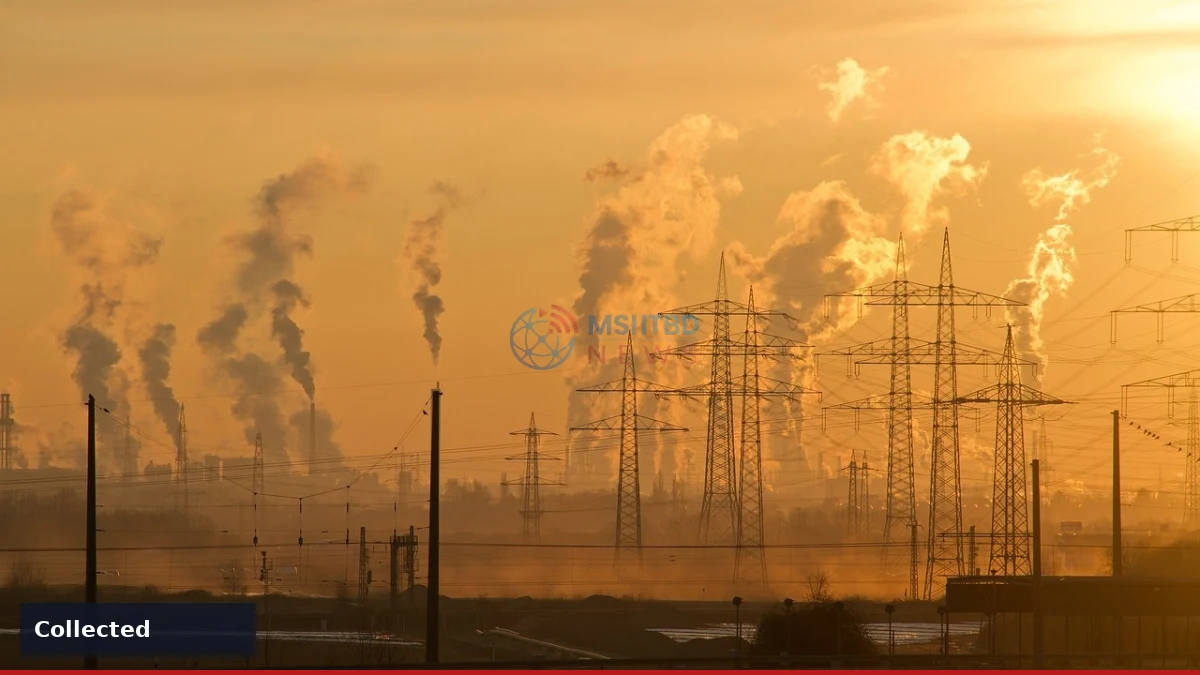

A single night of fireworks sent Delhi’s air quality soaring to hazardous levels, far beyond what health experts deem safe.
Key points
- PM2.5 levels in Delhi hit 879 µg/m³ on Monday, about 58‑59 times the WHO daily limit.
- The surge followed Diwali fireworks despite a Supreme Court allowance for limited “green” firecrackers.
- Vehicles, biomass burning, industry and secondary particle formation together drive Delhi’s winter smog, with secondary particles contributing the largest share.
- Long‑term exposure to air pollution in India has been linked to millions of premature deaths.
Air‑monitoring data released on Monday showed that the concentration of fine particulate matter (PM2.5) in New Delhi’s Mandir Marg neighbourhood reached 879 µg per cubic metre – roughly 58‑59 times the World Health Organization’s recommended daily maximum.
The reading, reported by the air‑quality service IQAir and based on a city‑government monitoring station, was recorded about eight hours after the peak of Diwali fireworks, indicating a sharp post‑festival spike in toxic particles.
Pollution levels hit record highs
Diwali, the Hindu festival of lights, is celebrated nationwide with fireworks, but in one of the world’s most polluted capitals the celebrations compound an already severe winter smog that stems from vehicle emissions, agricultural stubble burning and industrial activity.
Earlier this month, the Supreme Court permitted the limited use of so‑called “green” firecrackers, which are marketed as lower‑emission alternatives, yet officials say the restrictions are routinely ignored and the city was still reverberating with explosions on the night of the festival.
Fireworks, legal limits and enforcement
According to India’s environment ministry, vehicles contribute about 23 % of Delhi’s winter pollution, biomass burning (including farm stubble fires) about 20 %, coal‑fired power plants and other industry roughly 9 %, while secondary particles formed from atmospheric reactions account for the largest share at 27 %.
A 2024 study published in The Lancet Planetary Health estimated that 3.8 million deaths in India between 2009 and 2019 were linked to air pollution, underscoring the long‑term health stakes of such acute spikes.
Underlying sources of Delhi’s winter smog
In recent weeks, authorities have imposed temporary traffic curbs and construction bans in an effort to curb the city’s smog, but the Diwali episode demonstrates how quickly pollution can rebound when large‑scale firework displays occur.
Reader questions
Why did Delhi’s air quality worsen so dramatically after Diwali?
Fireworks release large amounts of fine particulate matter and other pollutants that add to the city’s existing winter smog, pushing PM2.5 concentrations to hazardous levels within hours.
What are “green” firecrackers and why are they still controversial?
Green firecrackers are marketed as producing fewer emissions than traditional fireworks. The Supreme Court allowed their limited use for Diwali, but officials say many vendors continue to use conventional firecrackers, undermining the intended benefit.
What health risks are associated with the reported PM2.5 levels?
PM2.5 concentrations at 879 µg/m³ are far above safe limits and can aggravate respiratory and cardiovascular conditions, increase hospital admissions, and contribute to the long‑term mortality burden linked to air pollution in India.
Source: yahoo.com